Sofa cleaning in Mauritius: fabric sofas at home
How to clean a fabric sofa at home in a humid climate. Read the care label, lift stains without spreading them, and dry it before it starts to smell.
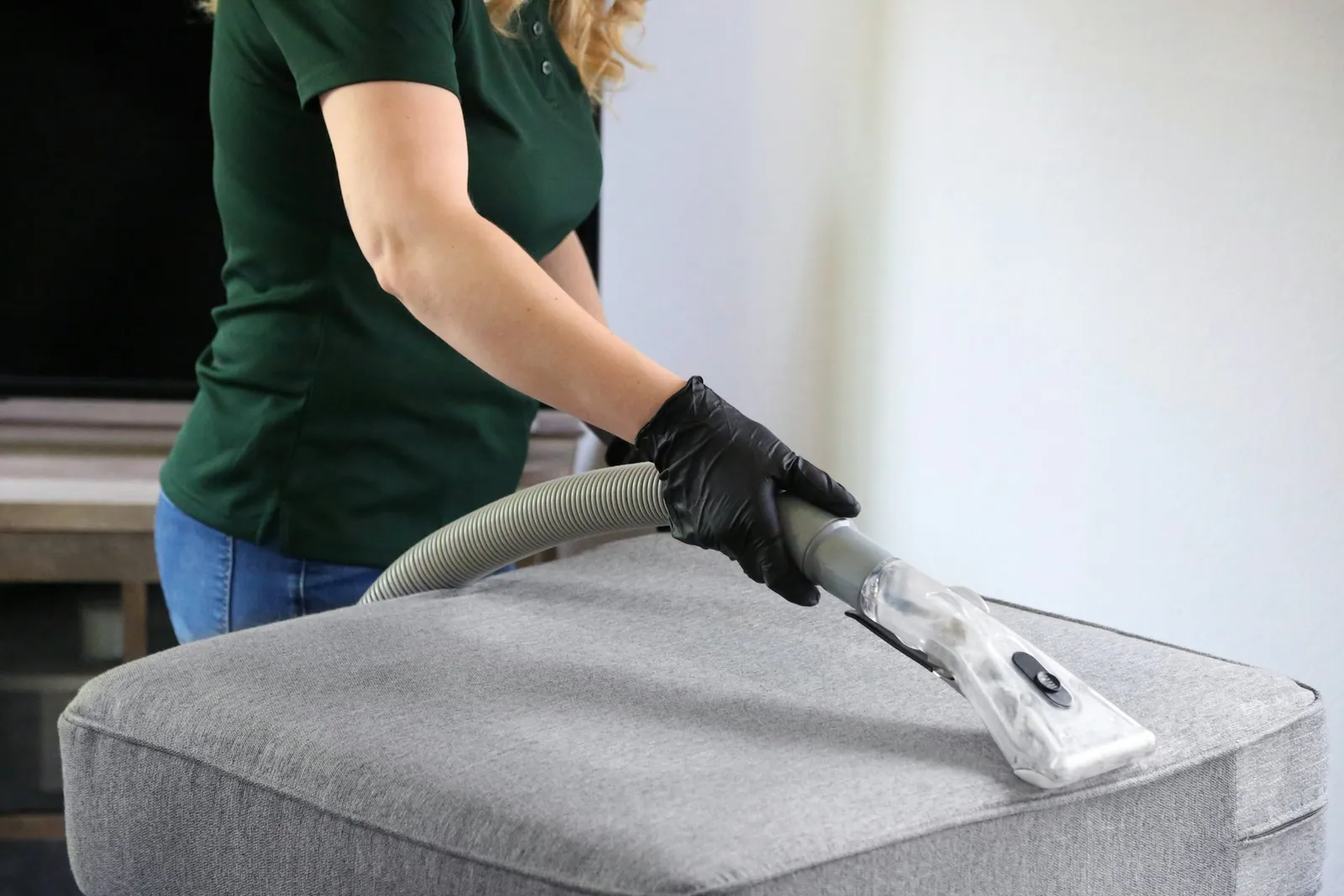
A sofa takes more daily wear than any other piece of furniture in the house. In Mauritius it also takes the humidity and the sand that comes in from the beach. Then there is the sunscreen and salt on everyone who sits on it after a swim. This is how to clean one properly at home, and how to tell when it needs more than that.
Start with the care label
Look under the seat cushions or along the base for a label with a letter on it. It tells you what the fabric will tolerate.
- W: water based cleaners are safe.
- S: solvent cleaners only. Water can leave a ring or shrink the fabric.
- W/S: either works.
- X: vacuum only. Any liquid risks the fabric, so leave the rest to a professional.
No label at all? Treat it as S and test anything you use on a hidden patch first. Try the back of the skirt or the underside of a cushion.
Vacuum it properly first
Every other step works better on a sofa that has been vacuumed thoroughly.
- Take off the cushions and vacuum the deck underneath.
- Run the crevice tool along every seam and down the sides, where sand, crumbs and coins collect.
- Go over every surface with the upholstery brush, including the back and the arms, working with the grain of the fabric.
Beach sand is abrasive. Left in the weave, it wears the fibres every time someone sits down. That is why a weekly vacuum matters more than an occasional deep clean.
Lifting stains without spreading them
- Blot, never rub. Rubbing pushes the stain deeper and roughens the fabric. Press a clean white cloth onto it and lift.
- Work from the outside in, so the stain gets smaller rather than wider.
- Use as little liquid as you can. For a W fabric, a few drops of washing up liquid in a cup of cool water, applied with a cloth rather than poured on.
- Rinse with a cloth dampened in clean water, then blot dry. Detergent left in the fabric attracts dirt and leaves a darker patch.
Hot water sets protein stains such as blood, milk and egg. Use cool water for those.
Sunscreen, body oil and the armrests
The darker patches on the arms and the top of the back are usually body oil and sunscreen rather than dirt. Plain water will not shift them. A little washing up liquid, which is made to break down grease, works on most W fabrics. Test it first, then blot, rinse and dry as above.
Drying is the part that matters most here
In a dry climate a damp sofa dries in a few hours. In a Mauritian summer it can stay damp inside the cushions for days, and a damp cushion is where mildew and the musty smell begin. Our guide to mould in Mauritian homes explains why.
- Open the windows if the air outside is drier, or run the air conditioning.
- Point a fan across the fabric.
- Stand cushions on their edge so air reaches both sides.
- Keep the sofa out of strong direct sun for long periods, which fades fabric.
- Do not sit on it or put the covers back until it is dry all the way through.
Freshening without water
To lift a smell, sprinkle bicarbonate of soda over the dry fabric, leave it for a few hours, then vacuum it up thoroughly. It is safe on most fabrics and uses no water at all.
Leather is different
Leather does not want detergent or soaking. Dust it, wipe it with a cloth that is barely damp, and feed it with a leather conditioner a few times a year. In a humid house, check the back and underside for mould spots, and keep leather furniture out of rooms that stay closed up.
When to call a professional
Call for help when the label says X, or when a stain has already been rubbed in or has spread. The same goes for a smell that comes back after cleaning, and for velvet, linen or silk, which mark easily. Removable covers that say dry clean only belong in the same category.
We clean sofas in your home, so nothing leaves the house, and sofa cleaning can be added to any clean. You can price it by the seat in our quote builder.
Our sofa cleaning page says what the clean involves and how it is priced.
Questions
How often should a sofa be cleaned?
Vacuum it every week, and give the fabric a deep clean once or twice a year. Homes with pets, small children or a beach on the doorstep need it more often.
What do the letters on a sofa care label mean?
W means water based cleaners are safe. S means solvent cleaners only, with no water. W/S means either. X means vacuum only, and anything more should be left to a professional.
Why does my sofa smell musty after cleaning?
It stayed damp for too long. In a humid climate a sofa that is soaked and left to dry slowly can start to grow mildew inside the cushions. Use as little water as possible and move air across it until it is completely dry.
Can you clean a sofa without taking it away?
Yes. We clean sofas in your home, so nothing has to leave the house. Sofa cleaning is priced per seat in our quote builder.
More insights
See all insights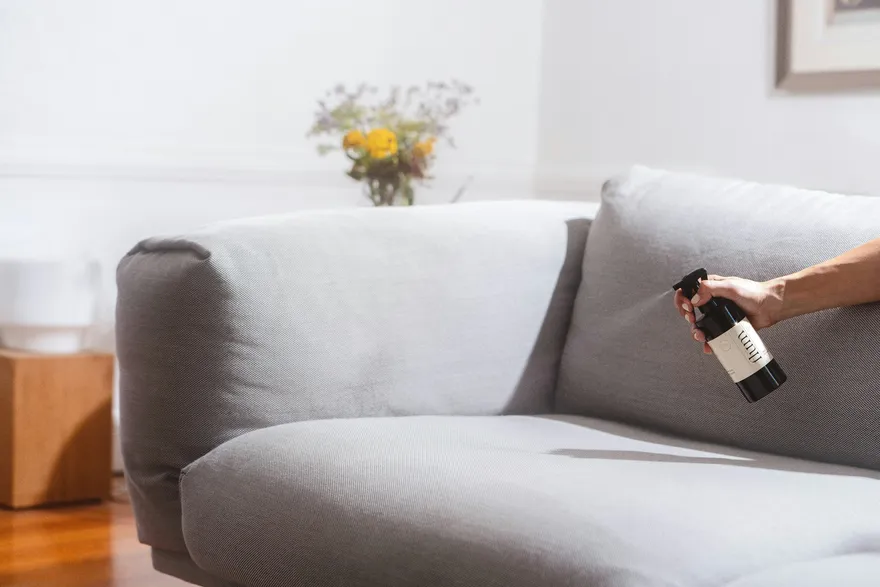
Sofa cleaning in Mauritius: how often, what it costs
How often a sofa needs a professional clean in Mauritius, with pets, children, humidity or sea air, and what it costs. Rs 250 a seat, cleaned in your home.Read now
Airbnb in Flic en Flac: keep your rental guest ready
For holiday rental hosts in Flic en Flac and on the west coast. Sand, salt air, humidity and quick changeovers, and how to keep the place ready for every guest.Read now
How much does a maid cost in Mauritius in 2026?
What hiring a maid directly costs in Mauritius in 2026: the minimum wage, part time pay, the 13th month, leave and cover. We also compare a house helper.Read now
Book now
Build your quote in seconds. The price you see is the price we charge.

Our quotation builder
Choose a cleaning service or book add-on care on its own. See your price in seconds.